The Pleasure of a Small, Repeatable Creative Habit
A small, repeatable creative habit can turn scattered interest into finished sketches, lines or stitches, without demanding a polished result each time.
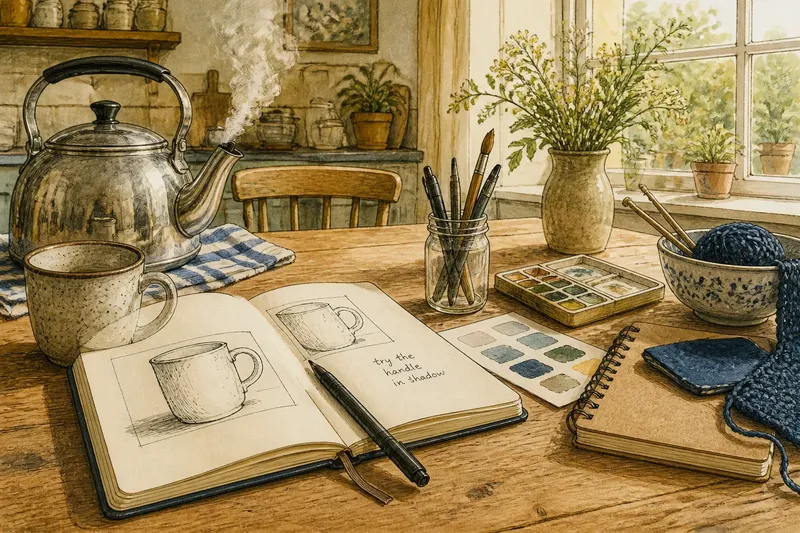
A sketchbook beside the kettle catches your eye while the water boils. A small, repeatable creative habit can turn that moment into a few lines on paper, a colour study or a row of stitches, with no need to clear an afternoon or produce a finished piece.
Give the work an edge
“Write a story” can feel like a whole undertaking; “write a few lines about the sound outside” gives you something to do with your hands. A clear unit makes a creative session easier to enter because it narrows the immediate choice.
Choose a unit you can recognise when it is done: one thumbnail drawing, a paragraph, a short passage of music, a colour study on scrap paper or a row of knitting. The task can be brief without being careless. Its boundary limits the commitment, not the attention you give it.
Choose a workable form
Match the activity to the materials and space you actually have. A pencil and scrap paper suit a quick drawing; a phone’s voice memo can hold a melody; a notebook can take a sentence or two. If getting ready becomes a project of its own, remove steps until you can begin with what is already at hand.
It can help to decide what the session is not meant to do. A colour study does not need to become a painting, and a paragraph need not resolve its subject. This distinction keeps a small practice from turning into a larger project by stealth.
Let the work change
A repeatable practice need not produce the same thing each time. You might draw the same mug from a new angle, write from a sensory prompt, or play a familiar chord with a different rhythm. A short list of prompts can offer choices without prescribing a result.
Say you have a pocket notebook, a black pen and a view of a crowded kitchen table, but keep waiting to start a larger illustration. You open the notebook, draw the outline of one object, then stop when the shape is recognisable. The result is a completed study and a visible choice for later: leave it as it is, or develop it into a fuller drawing. Neither option makes the short session a failure.
If you want to keep a thread between sessions, write a small note beside the work: “try the handle in shadow” or “continue with the blue paper”. The note is useful when it points to a choice, not when it becomes a promise that the next session must fulfil.
Questions about practice?
What can I make in a short session?
Pick a self-contained unit, such as a thumbnail sketch, a few sentences or a simple colour pairing. If your attention is too divided to make it, set out the materials and leave a prompt for a later session instead.
Does a creative habit need a fixed schedule?
No: a schedule is one way to make room for creative work, but it is not the work itself. You might return to a project when you have a suitable stretch of quiet, or when a particular activity naturally brings the materials to hand.
How can I stop judging each result?
Give the session a purpose other than making something polished: explore a line, test a colour or put an idea into words. Later, you can decide whether any part deserves revision, without asking every draft to justify its existence.
What if my materials are inconvenient?
Notice the specific obstacle: perhaps the paper is in a cupboard, the instrument needs setting up, or the desk is occupied. Move only the necessary materials to a more usable place, or choose a form that fits the space you have.
Keep the effort proportionate
What is not worth the effort is building an elaborate tracking system for a practice meant to leave room for curiosity. A calendar, an app and special supplies can become a second hobby of administration. Keep a note only if it helps you find your place or remember an idea.
A small, repeatable creative habit is useful when it helps you make actual contact with the work, whether the result is a sketch, a sentence or a half-formed tune. Keep the materials accessible, the session’s purpose clear and the next choice visible. The finished work may come later; for now, leave yourself something worth looking at again.