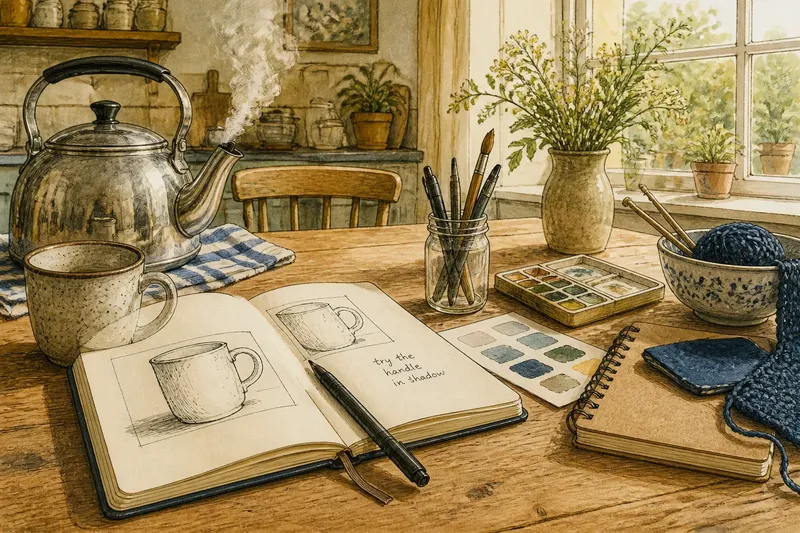
The Myth of the Perfect Morning Ritual
A flexible morning ritual gives you a steady point of attention through changing mornings, without demanding a long routine or an identical start.
The kettle clicks off as someone calls from the next room, and the morning changes course. A morning ritual can still fit here: not as a carefully staged beginning, but as one deliberate choice within the ordinary rush.
Perfection is a poor measure for a morning ritual. Its value is not in completing an impressive sequence before the day starts; it is in choosing how to meet a particular moment. That choice might involve the body, the room or the people nearby, rather than a cue designed to make the routine repeatable.
Rituals among daily tasks
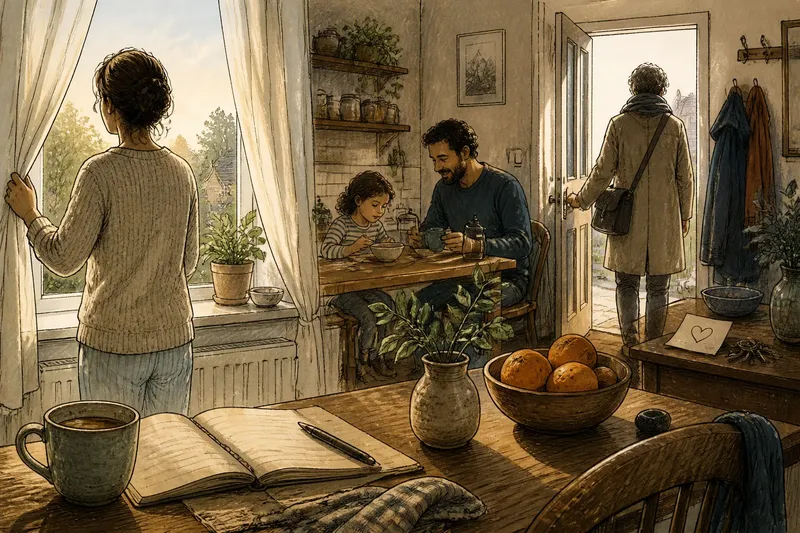
A routine moves practical tasks along: wash, dress, pack, leave. A ritual gives an ordinary action a particular significance. Opening the curtains might be a way to notice the weather before deciding what to wear; making tea might mark a quiet moment shared with someone else.
The difference lies less in the action than in what you attend to. You do not need special objects or a fixed sequence. A familiar mug, a window or a conversation may already carry enough meaning.
Meaning over duration
There is no proper length for a morning ritual. The time it takes to open a window or sit beside a child while they eat may be enough. More time does not necessarily add more meaning, especially if a longer practice makes the morning feel burdened.
What is not worth the effort is arranging a collection of candles, notebooks and carefully chosen music if those objects turn a small pause into another task. Keep what gives the moment character; leave out what makes you feel obliged to perform it.
Rituals for changing mornings
Some mornings are quiet; others are shaped by a late bus, a sick child or an unexpected call. Rather than making the ritual depend on one ideal set of conditions, let it respond to what is actually happening. It might be a shared breakfast on an easy morning and a kind word at the door on a hurried one.
Say you usually sit at the kitchen table with your partner before work, but an early appointment interrupts that conversation. You put a note beside their keys saying you hope the appointment goes well, then leave without sitting down together. The observable result is a small, personal gesture that carries the care of the usual morning into a different one; the trade-off is that it does not provide the same time for conversation.
This kind of adjustment is not a lesser version of the ritual. It makes room for changing people, plans and moods, and can keep the meaning attached to a morning rather than to a particular arrangement.
Choosing what matters
Instead of beginning with a sequence to maintain, ask what you want the morning to hold. The answer might be tenderness, quiet, a sense of occasion or a moment of play. Then look for an action that can express it in your actual home and circumstances.
- If the morning feels solitary, then choose a small act of connection, such as sending a warm message; if you want quiet instead, leave the phone aside and sit by the window.
- If you are preparing breakfast for someone else, then invite them to choose the music; if that adds friction, make the meal together in silence.
- If the room feels hurried, then set out one familiar object that makes the table feel welcoming; if it becomes clutter, clear the surface instead.
- If you have a few unclaimed minutes, then read a page of a book you enjoy; if the time disappears, leave the book for another morning without trying to catch up.
- If a shared ritual no longer suits everyone, then ask what small part still feels welcome; if no part does, let it change rather than insisting on the old form.
- If a meaningful object is awkward to use, then keep it somewhere you will see it; if it still feels like a prop, put it away and choose an action that needs nothing extra.
These are choices, not instructions for an ideal household. A ritual should belong to the people and place where it happens, including the interruptions and preferences that make that place recognisable.
Questions about morning rituals?
Can a morning ritual be shared?
Yes. A shared cup of tea, a brief conversation or a goodbye at the door can give a household a sense of connection. Let the form change if someone’s needs or schedule changes.
Does a morning ritual need special objects?
No. Objects can add meaning if they are already useful or welcome, but they are not required. A gesture, a view from the window or a few words can carry the moment just as well.
What if I want a quiet morning?
Choose an action that protects a little space without turning silence into another rule. You might make tea before conversation begins, or simply sit for a moment before joining the day.
When should I change a morning ritual?
Change it when the action no longer feels fitting, or when it creates strain for the people involved. Keep any part that still matters and release the rest without treating the change as a failure.
Room for revision
Notice what the ritual asks of you and of anyone who shares it. If it brings warmth or a welcome pause, keep it; if it becomes a source of friction, simplify the action or choose a different one. The point is not to preserve a routine at all costs.
A morning ritual can be modest and still feel particular to your life. Let the morning’s real needs shape its form, and allow the small gesture that matters today to be different from the one that mattered yesterday.